The problem
52,000 applications, one sheet at a time
The NCAT Consumer and Commercial Division (CCD) processes around 52,000 applications a year. Applicants lodged them by post using a paper form, or by emailing a PDF form to the registry. Registry staff then entered each application into the system manually, which led to data-entry errors and long processing times.
High-volume users, such as real estate agencies and social housing providers, could only submit applications individually. There was also no way to manage an application after lodgement. Submitting evidence, amending an application or requesting a telephone or video hearing each required a separate letter or email to the registry.
My role
From first click to filed case
I was given the opportunity to modernise the CCD user journey end to end. That covered three things:
- The entry pointsI redesigned every route into Online Services, including a refresh of the NCAT website home page and its guided pathway pages.
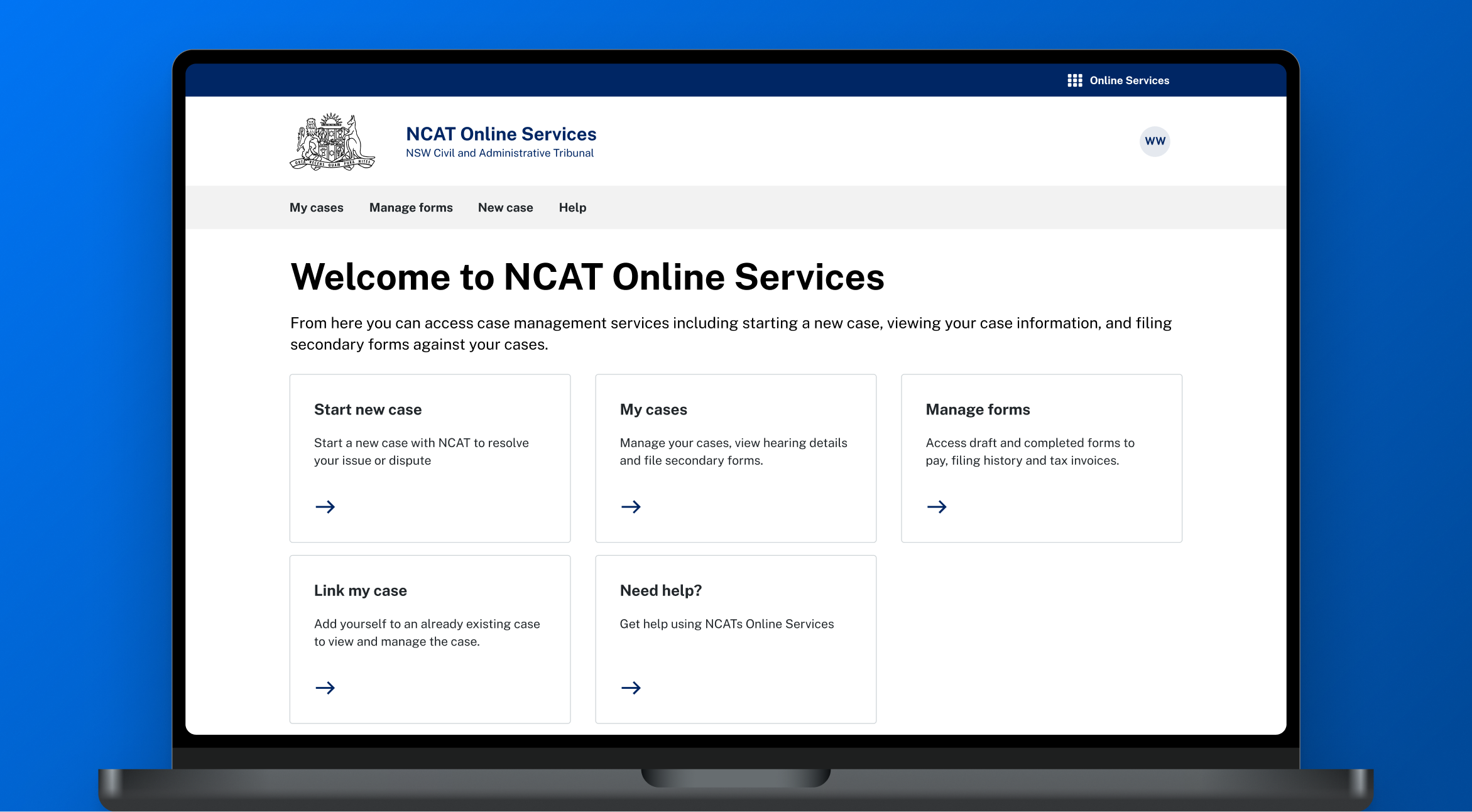
- The platformI designed Online Services itself: online filing (forms and payments), case linking and post-filing management.
- The formI designed the department’s first modern form templates using the NSW Digital Style Guide, including dynamic application forms that adapt to each type of user. These became the base template for forms across DCJ projects.
01
Going beyond the brief
Over the years, the NCAT website had become cluttered, with repeated content and broken links. The project scope only covered the entry points, and a full website refresh wasn’t planned. Knowing another opportunity might not come for years, I redesigned the home page and guided pathway pages in my own time and presented them to the NCAT board. The board responded positively, particularly to the clearer information architecture. NCAT updated the content.
02
Getting users straight to the right form
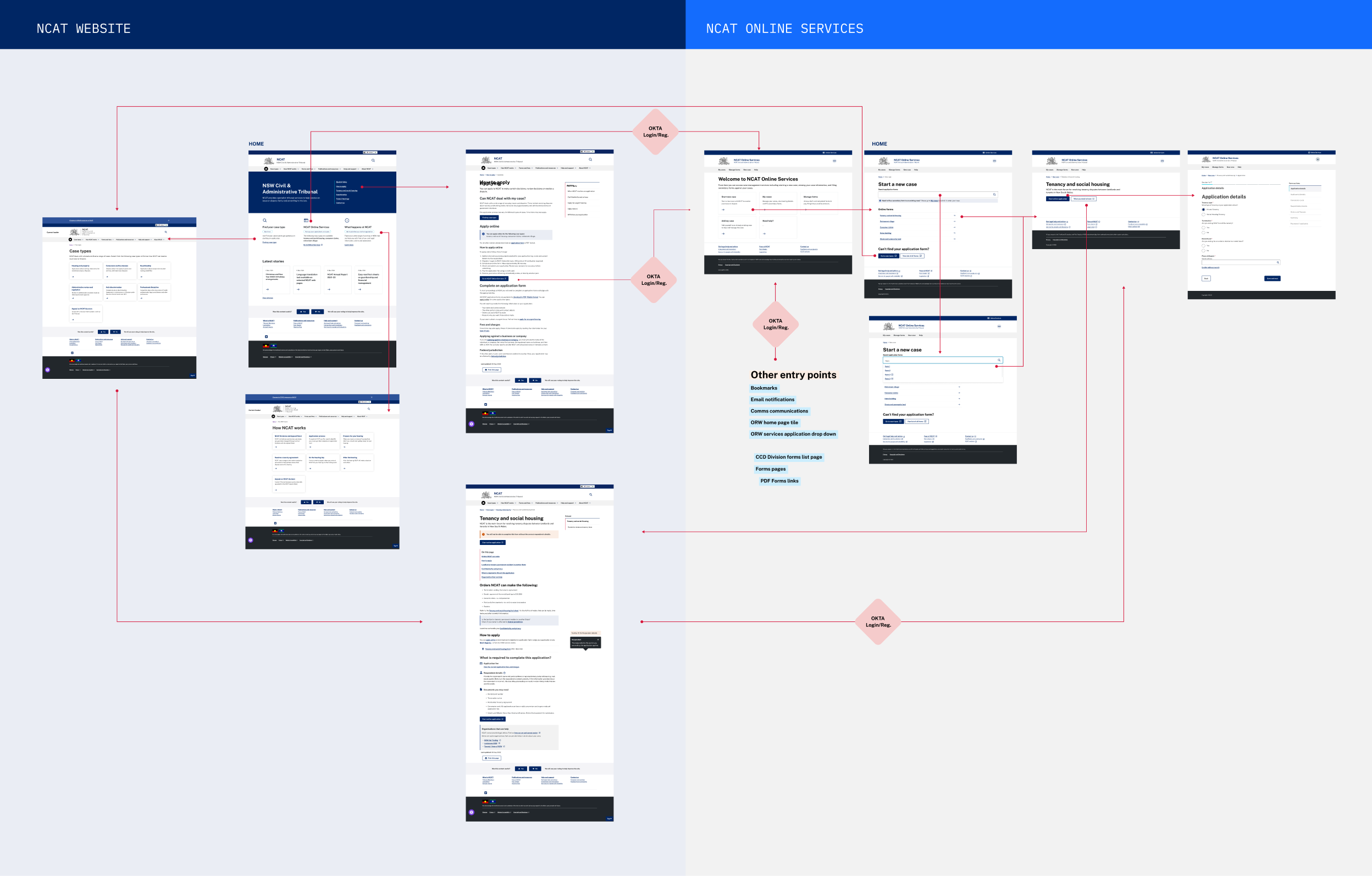
NCAT serves a wide mix of first-time and high-volume users, and the business priority was speed: getting people to the form they need as directly as possible. The guided pathway helps first-time users find and understand the right form on the NCAT website. I advocated strongly for tokenisation, so a user’s form selection carries through the login and registration journey. Instead of arriving at the generic Online Services home page, they land on a short intro page for the form they chose.
NCAT Consumer and Commercial Division (CCD)/2024-2025 report
-
83%
applications lodged online (43,658)
Mass adoption
-
71.4%
of the entire tribunal's caseload
Huge impact on the Registry
-
1.3 million
unique website visits
The importance of content
Online Services
Designing ahead of the backlog
With the team focused on forms, the platform screens risked becoming a bottleneck. I took the initiative to design them independently, before user stories were written, so development wouldn’t be held up.
The Online Registry’s legacy solution gave me a starting point. I used it as a foundation and made targeted improvements to usability and accessibility, rather than reinventing what already worked.
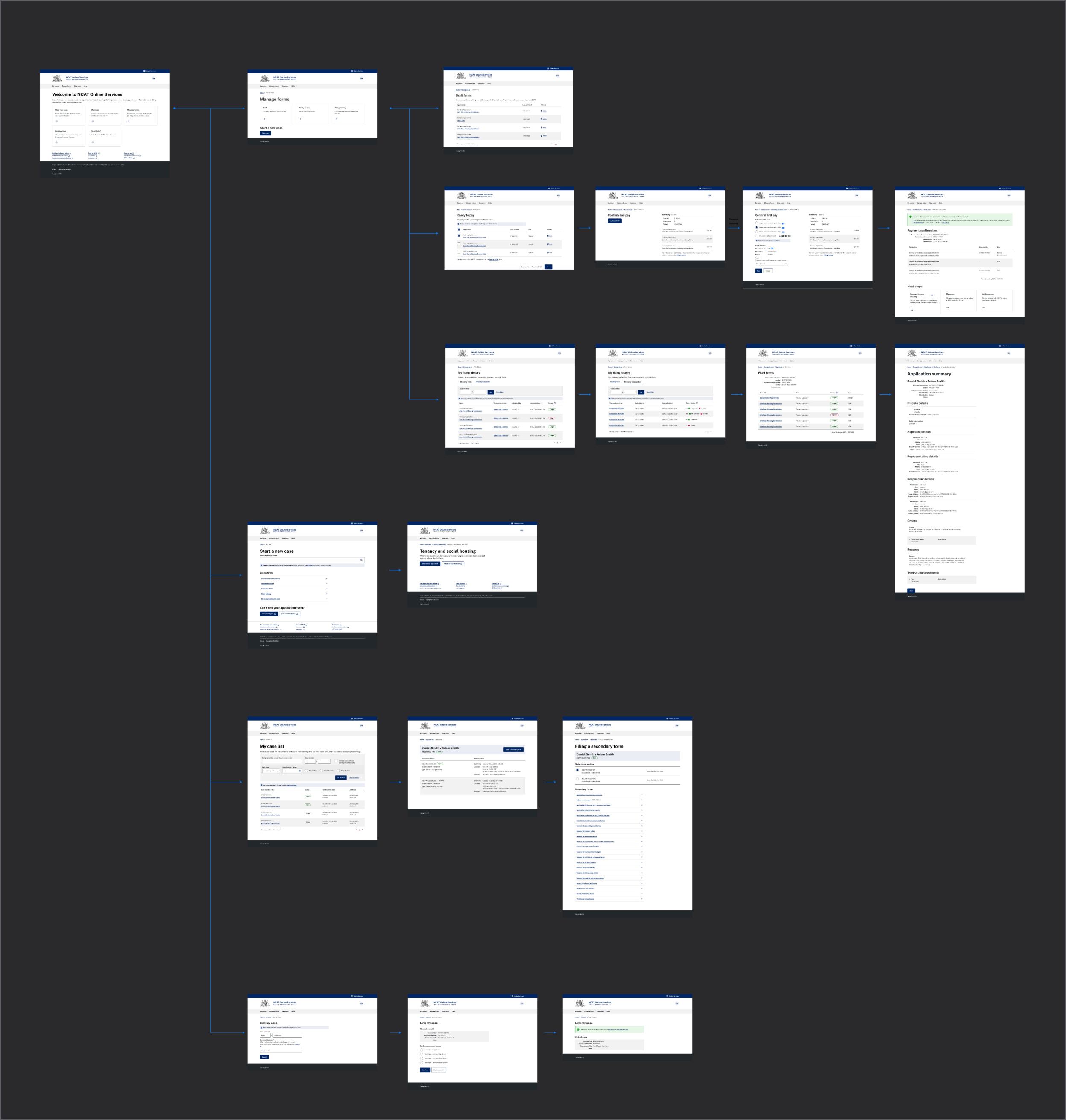
NCAT Online services flow
Forms
Building a system that scales
The department had no form templates in Figma, and the live forms were legacy designs that didn’t meet WCAG accessibility guidelines. I designed and tested a new set of templates.
Those templates outlived this project. They were later adopted for the Supreme Court forms project, a 12+ month program, where I was asked to sit on the approval panel and support the team when needed.
01
Merging forms without losing data
One of the hardest challenges was merging forms, for example combining the Tenancy and Social Housing forms into one. Working with the business, we mapped every field and its data integration with JusticeLink to make sure nothing was lost.
02
One form, many users
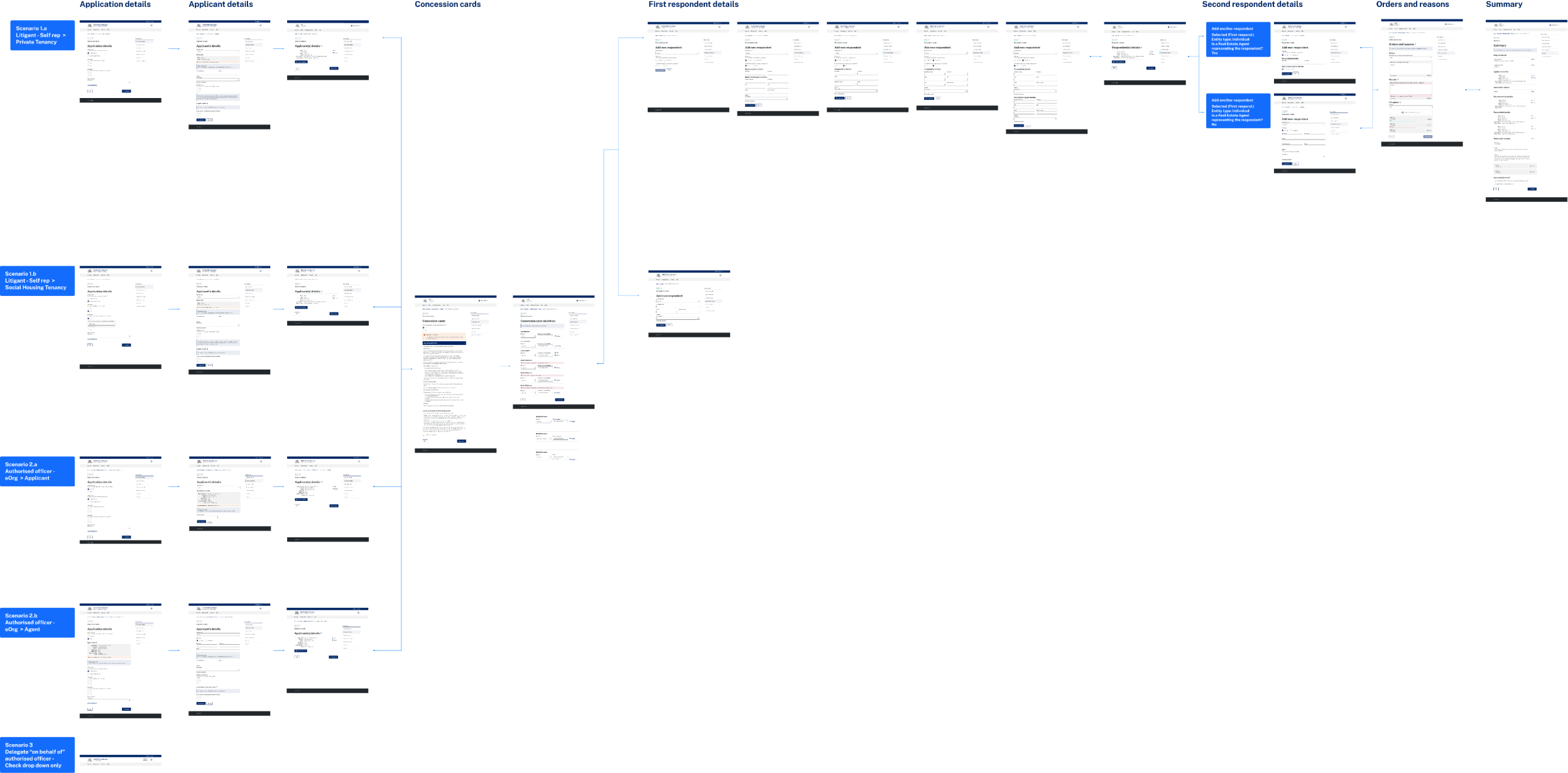
The Application details and Applicant details screens had to adapt depending on who was logged in: a self-represented litigant, a legal practitioner, an authorised officer or a delegate. Getting this logic right took many iterations with the BAs and developers. I ran workshops with the team and the business to work through the scenarios together until we landed on the correct logic.
The resulting Tenancy and Social Housing form became the base template for the OutSystems forms engine, which may be used to generates forms across all NCAT divisions.
The solution
One shared diary across every court
NCAT Online Services replaced postal and email lodgement with a single digital channel, from finding the right form on the NCAT website through to managing a case after lodgement.
Adoption and efficiency83.3% of applications in the Consumer and Commercial Division are now lodged entirely online. With applications submitted digitally rather than on paper, registry staff no longer need to re-key them manually, reducing data-entry errors and processing times.
Transaction bundlingHigh-volume users, such as real estate agencies, social housing providers and retail businesses, can complete multiple applications and pay for them in a single transaction rather than one at a time. This streamlines their administrative work and reduces overall processing effort.
Post-filing managementRegistered users can view their transaction history and hearing details in one place through the Online Services dashboard. Parties can also lodge requests online, including submitting evidence, amending applications and requesting telephone or video hearings, without waiting on post or email.
Website reachThe NCAT website now receives over 1.3 million unique visits and nearly 2.8 million page views a year, showing that access to information has grown alongside the move to online lodgement.
Reflection
Less blue sky, more ground truth
This project was one piece of a much larger program to digitise the entire NSW court system. Most of us, me included, were new to the court system, and the learning curve was steep.
Early on, we spent too long chasing blue-sky solutions. The biggest lesson I took away was to focus on what’s feasible, filter out the noise and put my energy where it makes the most difference.